Key Takeaways
- 1US tariffs on Chinese goods are redirecting surplus production to alternative markets including Australia
- 2Lower prices from redirected supply are available but come with increased quality risk
- 3Building supplier relationships before prices rise is the key strategic advantage
- 4Diversification and verification remain essential regardless of short-term pricing advantages
When the United States imposed escalating tariffs on Chinese goods beginning in 2025, the global supply chain did not simply absorb the shock. It redirected.
Manufacturers in China with products priced out of the US market began seeking alternative buyers. Surplus inventory built up. Trading companies that previously served American clients pivoted to Europe, Southeast Asia, and Australia. In some product categories, prices in Australia softened.
For Australian businesses that source from China, this creates both an opportunity and a trap. The opportunity is access to competitive pricing that may not persist. The trap is the same one that catches buyers during any period of price compression: the assumption that lower prices mean the same value.
This article explains what is actually happening in the China-Australia trade relationship, what it means for your sourcing strategy, and how to act strategically rather than reactively.
What the Tariff Situation Actually Means
The US-China trade relationship has been unstable since 2018, but the escalations beginning in 2025 crossed a threshold. With tariffs on Chinese goods reaching levels that made many product categories uneconomical for American buyers, Chinese manufacturers faced a choice: absorb the cost (squeezing margins to near zero), raise prices (losing market share), or redirect.
Most redirected.
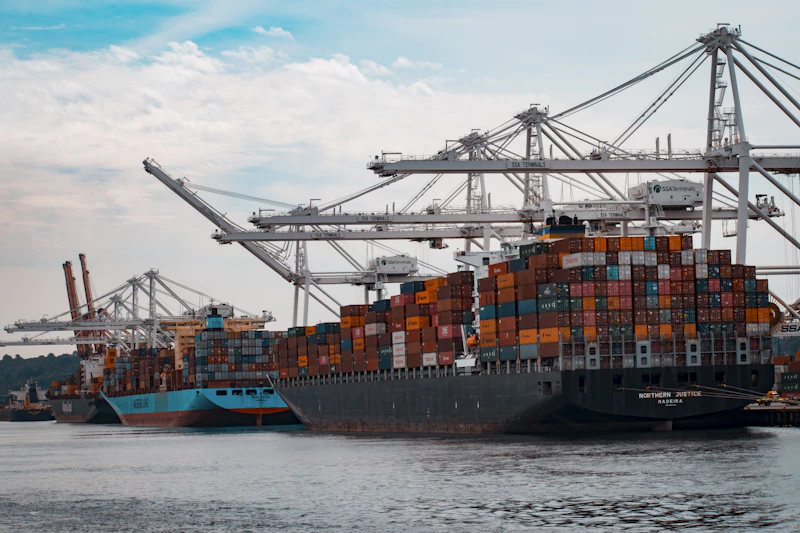
This is not a simple story of "dumping." The reality is more nuanced:
What is actually happening in some product categories:
- Redirected production capacity: Manufacturers who previously produced primarily for the US market are now actively seeking international buyers, including in Australia
- Clearing excess inventory: Some factories have stockpiled finished goods that were produced for US orders that were subsequently cancelled or reduced
- Increased competition among suppliers: More suppliers competing for fewer US buyers means greater price competition in Australia-facing sales
- Potential quality shortcuts: Some manufacturers facing margin pressure may reduce input quality to maintain profitability
What is not happening (or not at scale):
- Intentional dumping below cost into the Australian market (at least not yet, in most categories)
- Flooding of the market with substandard goods designed to undercut competitors (the "dumping" scenario in its most aggressive form)
The distinction matters because it shapes your response.
How This Affects Australian Importers
For most Australian businesses that source from China, the practical effects in 2026 have been uneven across product categories:
Electronics and components: Some categories have seen price softening as manufacturers redirect away from US markets. This is most pronounced in consumer electronics, audio equipment, and components for assembly.
Furniture and homewares: Moderate price competition as factories that previously served the US market seek alternative buyers. Quality variation has increased in some source markets.
Machinery and industrial equipment: Less affected in pricing, but some suppliers previously focused on the US market are now more open to Australian buyers.
Textiles and apparel: Significant price competition in some categories, with increased variation in quality as manufacturers seek to maintain margins.

The overall effect is that Australian businesses have more supplier options and in some categories more favourable pricing than twelve months ago. This window may be temporary.
The Opportunity: Building Relationships Before Prices Adjust
History suggests that when US-China trade tensions ease — through negotiation, absorption, or market rebalancing — prices tend to equalise. Manufacturers who redirected to alternative markets may shift capacity back toward the US if tariffs are reduced or if the competitive landscape in Australia becomes less attractive.
For Australian businesses, the strategic implication is clear: the current period of enhanced supplier interest and competitive pricing is an opportunity to build relationships that will provide stability when markets normalise.
Specifically:
Lock in quality suppliers now
Actively seek out manufacturers with strong production capability who are currently underutilising their US-dependent capacity. These suppliers are most motivated to build relationships with new buyers, which gives Australian businesses leverage to negotiate favourable terms, quality standards, and capacity guarantees.
Diversify your supplier base
Businesses that rely on a single supplier face concentration risk. The current environment makes it easier to identify and qualify alternative suppliers — and to do so with greater negotiating leverage than in a tight market.
Secure capacity commitments
If you anticipate demand growth, now is the time to negotiate capacity commitments with suppliers. Manufacturers with redirected capacity are more willing to guarantee production slots for buyers they want to retain.
The Risk: Quality Erosion and Supplier Instability
The same dynamics that create pricing opportunities create quality risks. When manufacturers face margin pressure, some respond by reducing input quality. A supplier who was producing to your specifications six months ago may be substituting components now — quietly, and in ways that are not immediately visible.
This risk is most acute with:
Suppliers you have not visited: Online-only relationships are most vulnerable to quality erosion. You cannot see whether the production line is using the same materials as your approved sample.
Suppliers competing aggressively on price: A supplier who won your business with a price significantly below market is under more margin pressure than one quoting at standard rates. They have more incentive to recover margin through quality reduction.
Suppliers who recently lost major US accounts: These manufacturers are under the most financial pressure and most motivated to cut costs anywhere they can.
The solution is not to avoid the opportunity — it is to manage the risk through verification and ongoing quality control.
The Verification Imperative: Verification Matters More, Not Less
In a market where pricing competition is intense and supplier financial pressure is elevated, verification becomes more important, not less.
In our experience at Winning Adventure Global, periods of heightened supplier competition tend to see an increase in:
- Trading companies presenting as manufacturers (competing for orders they cannot fulfil)
- Quality certifications issued by less rigorous bodies, or certifications issued to different companies
- Suppliers who can produce samples but cannot maintain quality at volume
The verification steps that protect you:
1. Verify the business license and physical address
Check China's National Enterprise Credit Information Publicity System (creditchina.gov.cn). Confirm the registered address is a genuine manufacturing facility. Use satellite imagery to verify.
2. Verify all certifications independently
Do not accept copies. Check each certificate against the issuing body's registry. For ISO certifications, verify on the ISO directory or the certification body's website.
3. Visit the production facility
No verification process substitutes for standing in the factory. See the machines. Watch the production line. Meet the management.
4. Establish quality specifications in writing
Your purchase agreement must specify not just the product but the materials, processes, and quality standards. Vague agreements give suppliers latitude to cut corners.
5. Arrange third-party inspection
For orders above AUD 10,000, third-party inspection is strongly recommended. For ongoing supply relationships, consider during-production inspection, not just pre-shipment.

Building a Resilient China Sourcing Strategy for 2026
The tariff environment will continue to shift. US policy is unpredictable. China's manufacturing sector will continue to adapt. Australian businesses that source from China need strategies that work across different scenarios.
Diversification without abandoning China
Completing entirely away from China is not a realistic option for most Australian businesses. China remains the world's most capable and cost-competitive manufacturing base for most product categories. The goal is not to exit but to build resilience.
This means:
- Maintaining 2-3 qualified suppliers per product category rather than relying on one
- Building relationships that survive price fluctuations — suppliers who know you are a serious buyer will prioritise your orders when capacity is tight
- Maintaining verification standards regardless of market conditions
The role of a China-based agent
For Australian businesses without dedicated China staff, a China-based sourcing agent provides the on-ground presence necessary for verification, quality control, and relationship management. The cost of a professional agency is a fraction of the cost of a single fraudulent supplier or quality failure.
Monitoring and adapting
Trade policy will continue to evolve. Monitor your supply chain for early warning signs of supplier financial stress, capacity reallocation, or quality changes. Regular communication with your suppliers — and with your verification contacts in China — is the best early detection system available.
What Winning Adventure Global Does
Winning Adventure Global has been helping Australian businesses source from China throughout the tariff escalation period. We have seen the redirection of supplier capacity firsthand, and we have helped clients take advantage of the window of opportunity while maintaining quality standards.
Our services include supplier verification, factory visits, quality inspection coordination, and ongoing supply chain management.
If the tariff environment is affecting your sourcing strategy, book a free 30-minute assessment call.
Related Articles
- How to Verify a Chinese Supplier — The complete verification framework
- Factory vs Trading Company — How to identify who you are dealing with
- How to Import from China — Practical guide to the import process for Australian businesses
Frequently Asked Questions
Are Chinese goods actually cheaper in Australia now because of US tariffs?
In some product categories, yes. Manufacturers who previously served the US market and are now redirecting to alternative buyers are offering competitive pricing to secure new customers. This is most visible in electronics, furniture, and homewares. However, pricing advantages vary significantly by product category and supplier. Not all categories have seen the same level of price competition.
Is it risky to switch suppliers now to take advantage of lower prices?
Switching suppliers always carries risk, but it also carries opportunity. The key is to apply the same verification standards to new suppliers that you apply to existing ones. The risk of switching to an unverified supplier is greater than the risk of paying slightly more for a known, verified supplier.
Should Australian businesses be stockpiling inventory ahead of potential price increases?
This depends on your product category, storage capacity, and working capital position. In some categories, it may make sense to secure forward orders at current pricing. In others, the cost of carrying excess inventory outweighs the benefit of price certainty. Discuss your specific situation with a sourcing advisor.
How do US tariffs affect Australian businesses that are not directly importing from China?
Indirectly, US tariffs affect Australian businesses through the reallocation of Chinese manufacturing capacity and the global price effects in various commodity markets. Australian businesses that compete with US businesses in markets where Chinese goods are now cheaper may face additional price competition.
Will tariffs make China sourcing less competitive long-term?
Long-term, China remains the world's largest manufacturing economy with the most complete supply chain infrastructure. Tariffs impose costs, but they do not change the fundamental economics of manufacturing in China for most product categories. The more likely long-term effect is supply chain diversification among some buyers, not an abandonment of China as a sourcing destination.
How can I verify a supplier's export track record to Australia?
Ask for shipping documentation: bills of lading, commercial invoices, or export records from the past 12-24 months. Genuine manufacturers with Australian export experience should be able to provide this. You can also check customs data services, though these are not always complete for smaller shipments.
Should I be concerned about supplier quality during periods of intense price competition?
Yes. When suppliers are under financial pressure, the temptation to reduce input quality to maintain margins increases. This is not universal — many suppliers maintain excellent quality regardless of market conditions — but it is a known risk that requires active management through verification, inspection, and relationship monitoring.
How does the Australia-China free trade agreement (CHAFTA) affect sourcing costs?
CHAFTA has progressively reduced tariffs on most Australian imports from China. Many goods now enter Australia at 0% tariff under ChAFTA. Your import costs depend on the specific product category, the applicable tariff code, and the current ChAFTA schedule. Verify the tariff rate for your specific product with a customs broker.
Is now a good time to start sourcing from China for the first time?
The current environment has advantages for new buyers: more supplier interest, more competitive pricing, and greater willingness among manufacturers to take on new customers. The risks are the same as always, and verification standards should not be reduced because prices are attractive. If anything, the financial pressure on suppliers makes verification more important.
What is the single most important thing Australian businesses should do right now regarding China sourcing?
Build relationships with quality suppliers while conditions favour buyers. The current period of redirected capacity and competitive pricing is temporary. Businesses that establish strong supplier relationships now will have stable supply chains when the market normalises. The action is simple: verify thoroughly, negotiate well, and invest in the relationship.
China Sourcing Strategy
Sourcing from China in 2026? Get strategic advice
Winning Adventure Global helps Australian businesses navigate China sourcing in a changing trade environment. Book a free 30-minute assessment.
Book a free assessmentFree initial consultation · We respond within 4 business hours